- Email:info@psycare.it
- WhatsApp: +39 375 703 9065
20 Feb
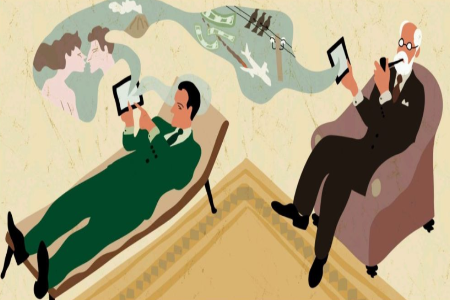
The Online Cognitive Behavioral Therapy for emotional disorders, such as those resulting from panic attacks and depression (mild or moderate), has been the subject of analysis and study in terms of evaluating its effectiveness, especially in recent years. Scientific research has thus demonstrated that a session of online psychology it turns out as effective as traditional face-to-face sessions in the psychologist’s office.
The online psychology, in short, it works.
There is a lot of scientific evidence of the effectiveness of online cognitive behavioral psychotherapy and, despite Italy, in many countries, both European and non-European, it is the health service itself that provides the service. online psychology for cognitive behavioral therapy.
The classic Cognitive Behavioral Therapy (TCC) has obtained evidence of effectiveness even when carried out online in various accredited studies.
The APA (American Psychological Association), the most important psychological association in the world (the one that develops international guidelines on psychopathology) has studied the phenomenon of online therapy and psychology to evaluate its actual effectiveness. And the result confirmed, for those who still had doubts, that this method has the same value as face-to-face therapy.
Online cognitive behavioral therapy: who is it for?
The online cognitive behavioral therapy, which can be included in the renowned and increasingly popular E-therapy, is as effective as traditional group cognitive behavioral therapy for the psychological treatment of very common clinical conditions, such as mild and moderate depression and panic disorder.
The study of theWHAT He also listed, among other things, the therapeutic range for which online psychotherapy has proven to be particularly effective; this is the case of:
- panic attack disorders
- eating disorders
- mourning
- major depression
TCC online: the sources are there, and they are also quite substantial.
Professor Gavin Andrews, as far back as 1996, underlined how some psychosocial interventions with a cognitive-behavioural orientation (Gavin Andrews. Talks that work: the raise of cognitive-behaviour therapy. British Medical Journal, 1996,313,1501-1502):
“If they had been drugs, they would have been registered as effective and safe and would be an essential part of every doctor’s pharmacopoeia.”
Therefore, today they would be well beyond consolidated use at a therapeutic level.
Even a more recent research conducted at the Karolina Institute in Stockholm (Panic disorder and depression can be treated over the Internet, study suggests. ScienceDaily. Retrieved September 12, 2011) states, in support, that:
The findings support the introduction of online therapy as a standard treatment in psychiatry. This action is recommended by the National Board of Health and Welfare in its new guidelines for the treatment of depression and anxiety.
The list could go on, but the results that emerged are ultimately overlapping; the difficulties of managing the Cognitive Behavioral Therapy online they can be overcome with minimal effort, to the full advantage of the well-being that the therapy aims for.
A new way of doing TCC
A new way of doing things was identified already in 2012 Cognitive Behavioral Therapy, a way that uses technological tools that are increasingly accessible to the patient; and which constitutes a particular form of TCC defined by the Anglo-Saxons as “Internet Based CBT” or Online Cognitive Behavioral Therapy, Meaning what internet-based.

The 2012 study by Hedman and colleagues systematically analyzed the literature on the effectiveness and cost-benefit balance of online therapy, considering as reference indicators the improvement of the main symptoms presented by the patients based on the diagnosis received.
The study analyzed 108 scientific articles. Of these, 104 confirmed the effectiveness of Online Cognitive Behavioral Therapy and therefore the excellent results obtained especially for the treatment of a particular category of disorders, in which 25 different types of disorders were included with the respective application of TCC.
So, how to proceed?
Unpredictable events lead to a new assessment of the new trend, the trading sessions online psychology.
We cannot help but pause to reflect on the future of psychoanalytic practice. It is imperative to analyze the potential effects of a potential “swing” between virtual and in-person settings, as well as the advantages of managing sessions online that allow for this.
The online therapeutic setting defines a new dimension.
When the online psychology It will no longer be a forced alternative; when the therapist and patient can once again choose where to see each other, it will be a pleasure to truly be able to choose, taking into account the benefits of this new way of doing therapy.
Alternatives to the now well-established, but not always accessible, in-person therapy are already establishing their own environment, their own virtual studio. The software options available are the result of a thoughtful analysis of the present, but with the future in mind. A valid reference of this kind can certainly be PsyCare.
In light of the many observations made and in consideration of the scientific studies that are increasingly trying to prove the effectiveness of the Cognitive Behavioral Therapy online, also supporting the greater predisposition to the issue, the therapies, inevitably, they adapt to the times and reduce distances.
We are sure that one of the most obvious consequences will be the ability to have therapy sessions anywhere and anytime.

PsyCare for the Environment