- Email:info@psycare.it
- WhatsApp: +39 375 703 9065
20 Feb
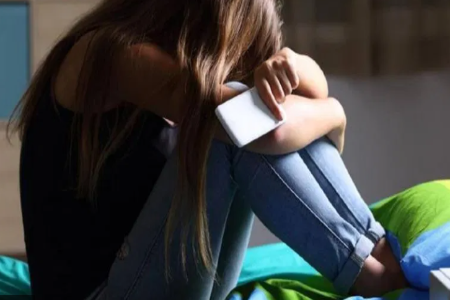
Attempts to suicide among the youngi during the pandemic they are on the rise: the alarm comes from Prof. Stefano Vicari, Full Professor of Child Neuropsychiatry at the Faculty of Medicine and Surgery of the Catholic University of the Sacred Heart in Rome and Head of the Complex Operating Unit of Child and Adolescent Neuropsychiatry at the Bambino Gesù Pediatric Hospital.
It takes on serious connotations, and should not be underestimated.
There are no platitudes to accompany the data shared by the professor in an interview that brought to light a problem that should not be underestimated.
Stefano Vicari raises the alarm:
Isolation seriously jeopardizes their mental health. We’re denying young people an emotional connection that’s integral to their adulthood.
The problem is widespread. Perhaps it would be more accurate to talk about the difficulty in addressing the root of the problem: isolation. Isolation that puts mental health at risk as well as physical well-being. That forced isolation that, between one Prime Ministerial Decree and the next, has led our children to lock themselves in, rather than on themselves..
The other pandemic that kills young people: isolation
I digital natives They are not ready to be alone, they are not by choice and even less so if they have to be alone as the only alternative.
Prof. Vicari's words are like blades:
«They cut their forearms, thighs, abdomen. Others try to suicide. I'm reminded of a 12-year-old girl who threw herself out of the window..." and «...i young They close themselves off like hedgehogs, they take refuge in their world and in their room and we don't know if they will want to come out of this shell, once the storm has passed...".
It seems like a story from another time, at times one hopes that everything was made up; but no. In the interview given at the beginning of the year to a national newspaper, his story regarding the theme of suicide among the young he is heartbroken and worried, the pandemic It certainly contributed to worsening an already delicate situation: “There’s certainly a very suspicious coincidence, and we’re certain that the rapid increase we’ve seen in recent months in certain disorders, particularly anxiety, irritability, stress, and sleep disorders, is directly linked to isolation.”.
At the Bambino Gesù in Rome, the situation is worrying and reflects the tragedy of the moment. Professor Vicari reports an increase in self-harm and attempted suicide. suicide; numbers speak louder than words: «…in 2011 the young there were 12 hospitalizations, In the year just ended we exceeded 300…”; it is undeniable that it is also a consequence of the pandemic still in progress.
The professor then clarifies that: «Although official statistics tell us that the number of suicides among adolescents is slightly decreasing, self-harm is rapidly increasing. Never before have we had 100 percent of available beds in the ward, compared to the average of 70 percent in other years. The predominant diagnoses are those of attempted suicide. suicide (per i young). For weeks I had all the beds occupied by attempts to suicide and it had never happened to me…». And the pandemic it is not resolved yet.
The causes of attempted suicide among young people weigh more than the reasons
And while many, perhaps, are trying to find a reason for such an extreme yet human attitude, an important consideration emerges from his interview in this regard:
«The motivations aren't that decisive. ... The causes are important but secondary. Mental illnesses are illnesses, they have a biological basis and are the result of long processes. ....
And in his words we also find the solution:
«We need to start thinking of mental disorders as real illnesses, like diabetes and hypertension, with a biological and genetic basis and environmental factors that can contribute to their onset... And then there's neglect. The real abuse, the real trauma that impacts mental health isn't even violence, but parental indifference and abandonment. Modern forms of neglect also include hypostimulation, like leaving a two- or three-year-old child for long hours in front of the TV or on a tablet.
Relationships: Fertile Ground for Suicide Attempts
Regarding the worrying increase in the number of attempts to suicide among the young, it can all be traced back to pandemic, in short. And the literature confirms it: the lockdown, the total closure, and the closure of schools have led to an increase in anxiety and depression among children and sleep disturbances..
However, other factors should not be overlooked: relationships, within the family and at school.
So, what about parents? Professor Vicari clarifies an important aspect:
In some cases, they're completely taken aback, scared because they never noticed their children's illness. But parents aren't to blame, but rather responsible. They have a duty to monitor what their children do and who they hang out with. This means taking an interest in their lives and maintaining an open dialogue. It's certainly not about acting like a cop. Parents aren't the cause, but they have a great opportunity to reduce the risk, as does the school..
Yes, the school:
School fosters peer relationships and, in this sense, acts as a buffer against adolescent conflict. We've all experienced positive relationships at school, and with friends, and only with them, we talked about the things we were discovering. Who among us hasn't had a teacher who was a lifesaver? Because adolescents experiment with and violate the limits set by their parents, and if there isn't another adult who has a meaningful emotional relationship with the child, they risk losing it. Today, this social buffer is lacking, which is why kids "blow up," become aggressive and violent, or increasingly withdraw into their rooms and don't want to come out.
His considerations are clear and comprehensive. The solution seems within reach, but it’s difficult to put into practice. In some cases, knowledge is lacking, in others, the tools. Psychological support is important, fundamental. Psychotherapy is not a marginal solution.
The suicide alarm among young people is not lost in thin air
But fortunately, something has moved: precisely between school and family.
Some directives have finally become reality psychological support also at school; and the family, by extension, benefits from it. Last September 2020, a law was approved memorandum of understanding between the CNOP (National Council of the Order of Psychologists) and the MIUR (Ministry of Education, University and Research). After several years without regulations to regulate the profession of school psychologist, we finally have.
And increasingly advanced technologies also allow families, even as individuals, to organize themselves: those who had already started psychotherapy have been able to continue it remotely. An increasing number of psychologists are also present remotely, because online psychology It has its advantages.
One consideration seems pertinent: it’s essential to rely on a trusted therapist who can provide support in times of difficulty. They will certainly be the only ones who can devise a therapy that leads to at least better management of difficulties and situations, if not to the resolution of the problem.
In times of restriction and closure like the one we are currently experiencing, being able to access remote psychological support therapy is an advantage that shouldn’t be underestimated. Isolation can be overcome.

PsyCare for the Environment