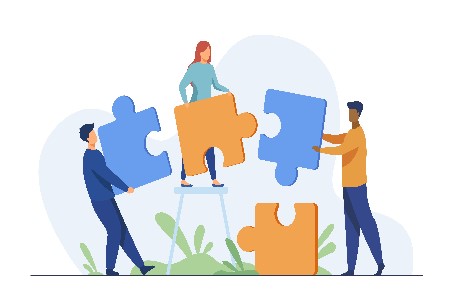
The co-therapy It involves the joint, integrated, and synergistic work of two professionals toward a common goal: improving the patient’s condition and their disorder or problem. It is a family therapy technique and can also be applied individually, as a couple, or as a group.
Co-therapy is now widespread and consolidated throughout the world: it is practiced not only for therapeutic purposes but also for educational purposes for the training of therapists themselves, even in online therapy.
Resort to the co-therapy It means deciding to work together for the patient’s benefit. And before starting this type of process, all the necessary assessments must be made..
They should not be underestimated Like all therapies, it presents difficulties; difficulties that arise primarily from the relationship between the two therapists. And the conditions necessary for this type of therapy to bring the greatest possible benefit to the patient must be identified, namely:
I co-therapists they are two professionals, not necessarily belonging to the same current, who constitute a dyadic relationship, thus creating a relationship and/or rapport between two people, or an interaction between two psychological and/or cultural aspects.
The dyad, from the late Latin dyas and the Greek δυάς (derived from δύο = two), is a psychoanalytic term introduced by René Árpád Spitz to indicate the mother-child relationship in the first years of life.
The term “dyad” refers here to a specific mode of interaction between two individuals, arranged in a specific setting that favors interactive communicative exchanges between the two individuals participating in the “dyadic relationship“. AND understood, therefore, as the formalization of the dyadic relationship within of a specific setting, as the interaction that occurs between two individuals in a non-causal way, managed in a defined way and with specific purposes.
The practice of the “dyad” can be used in various contexts: its use is transversal and multidisciplinary. The individuals who implement it, that is, theand figure diadiche they can be different, but the possible dyads are well defined:
A dyadic relationship of this type is common in family or couples therapy and for other disorders that do not require complementary drug treatment: the two participants can be experts or one of them can be an intern.
In couples and family therapy, having a pair of psychologists allows them to act as role models. This can help resolve some issues and allows the patient (the couple) to have two different perspectives on the problem.. Therapists will also serve as role models for parents and for interacting with their children. One of the main advantages of co-therapy is that it avoids potential coalitions between one member of the couple and the therapist “against” their partner.
Perhaps one of the best-known therapies conducted by two therapists of the opposite sex was Sex Therapy by William Masters and Virginia Johnson, developed in 1970 for the treatment of sexual disorders. Couples therapy was first proposed by Mittelman in 1948 and implemented by him in 1961.
Therapists may also include a psychiatrist and a psychologist. This is more common in more serious mental disorders that require pharmacological treatment in addition to psychotherapy. In this case, Co-therapy involves integrating pharmacological and psychological therapies. This is especially necessary for more severe mental disorders that require multimodal intervention.
In some disorders, pharmacological treatment is aimed at improving symptoms that can interfere with normal functioning, and therefore with therapy. This leads patients to respond better to psychotherapy.
Similarly, psychotherapy can improve medication acceptance, increasing adherence to pharmacological treatment. A wide variety of disorders benefit from this therapeutic discipline. These include, for example: substance abuse disorders, psychotic disorders such as schizophrenia,some mood disorders (such as major and chronic depressive disorders) and alsosome eating disorders (such as bulimia nervosa).
We can also talk about co-therapy when a person close to the patient is trained to act as a collaborator. This allows them to help the patient complete the therapy activities at home; this is useful, for example, in vivo exposure exercises for the treatment of phobias. This also occurs in the treatment of childhood problems, such as autism spectrum disorder, bedwetting, or intellectual disability. It is essential that parents and/or teachers are trained to act as co-therapists to continue the treatment after the session. It can also be very useful with elderly patients, especially those suffering from dementia. Training family members or caregivers allows for better management of the condition and improves living conditions and the environment. Furthermore, it allows treatment and the necessary cognitive stimulation activities to be continued at home..
It’s clear, therefore, that not all treatments or therapies require the combined efforts of two therapists. Even from the perspective of systemic technical integration (where one treatment technique or another is chosen depending on the patient), this can be counterproductive.
However, as numerous studies have shown, the variety of disorders that respond best to co-therapy is wide; this is true whether it involves the intervention of two psychologists, a psychologist and a psychiatrist or a person close to the patient trained to collaborate in the treatment.
The advantage of co-therapy lies in ‘complementarity’: which It means collaborating, coordinating, and working together. All for the benefit of the patient.
The patient sees himself in the video consultation: when it is necessary
The digital signature in PsyCare? Just a click away!
Sharing a document online: it’s easy on PsyCare
PsyCare’s online calendar reminds you of appointments with a reminder!
Personalizing your online session invitation: why it’s important
Patient ID: Is it mandatory?
Online group therapy? You can do it on PsyCare!
Drawing, shapes, and images in psychotherapy: online with the virtual whiteboardWhatsApp: +39 375 703 9065
General Inquiries: info@psycare.it
Support: help@psycare.it

PsyCare for the Environment
We offset CO₂ emissions by planting a tree for every activated subscription: learn more.